They're Not Saving Racing—They're Building a Profitable Events Business On Its Corpse
One creates racing fans through education. The other creates attendance figures whilst horses become wallpaper. Guess which one gets £200k prize money?
HORSE RACINGBUSINESS

The Glow Stick Gambit: When Racing's Saviours Sell Snake Oil
British racing's demographic crisis has spawned a rescue mission led by an unlikely alliance: Arena Racing Company and Dom Matcham's INVADES, promising to save the sport through DJ sets, speed dating, and what they're flogging as "Sport, supercharged." The pitch is seductive in its simplicity—get students drunk near horses, hope some of them accidentally develop a passion for handicap chasing, declare victory when the attendance figures arrive.
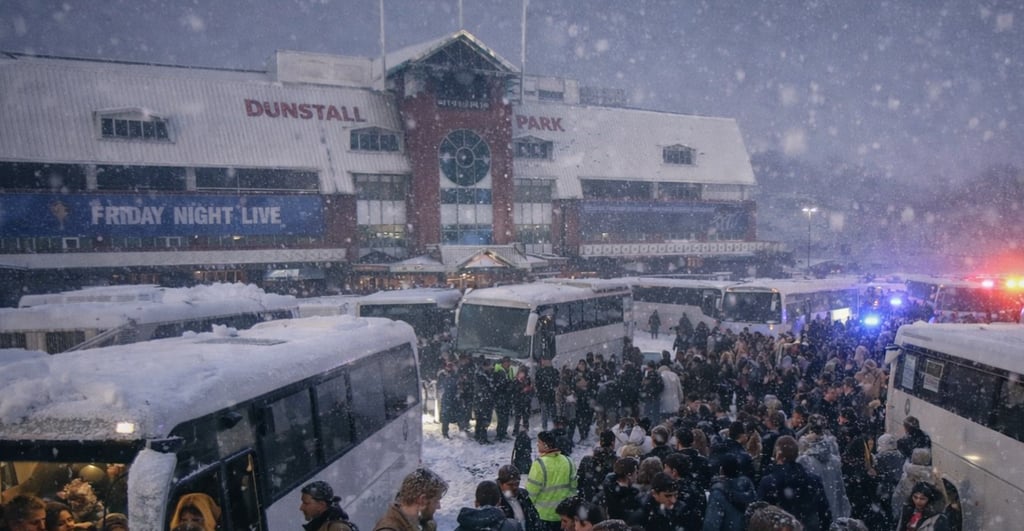
There's only one small problem. Before we could even begin measuring whether this £200,000-per-meeting gamble might actually work, the Gods of Winter delivered their verdict. The inaugural Friday Night Live at Wolverhampton on January 9, 2026, was abandoned due to snow and frost. Not postponed. Abandoned. Thousands of students stranded on coaches, prize money uncontested, and the entire strategic edifice looking rather less "supercharged" than comprehensively grounded. You couldn't write comedy this perfect without being accused of rank implausibility.
But the meteorological farce merely exposes a far more uncomfortable question that British racing seems terrified to ask: do Dom Matcham and ARC actually give a damn about saving the sport, or are they simply exploiting its demographic desperation to build a profitable events business that treats horses as ambient wallpaper?
Follow the Money, Question the Motives
Let's examine the evidence with the clear-eyed scepticism it deserves.
ARC took a 50 percent equity stake in INVADES in September 2025. This isn't philanthropy—it's a commercial investment in an events company that has already sold 450,000 tickets across multiple sports. INVADES' business model is explicitly sport-agnostic: they've done cricket, they've done racing, they'll do synchronised swimming if the demographics and profit margins align. Dom Matcham himself—credit to him for honesty—describes his clientele as "entertainment fans, not necessarily racing fans." Read that sentence again. Slowly.
The man architecting British racing's youth engagement strategy has openly admitted his customers don't care about racing. They're entertainment tourists. They're there for the party, and the sport is merely the venue landlord. This isn't demographic salvation—it's venue hire with delusions of grandeur.
Now consider ARC's position. They operate 16 racecourses, many of them struggling all-weather tracks desperate for any revenue stream that doesn't involve explaining to punters why the 7:30 at Wolverhampton matters. INVADES offers them guaranteed attendance figures, coach-loads of students paying £19-£25 per head, bar takings, and sponsorship opportunities. It's a brilliant commercial model for ARC's bottom line.
But here's what it's not: a strategy to create lifelong racing fans.
The Conversion Con Nobody's Counting
The entire INVADES edifice rests on a conversion thesis so optimistic it would embarrass a cryptocurrency enthusiast: get enough students drunk enough, near enough to horses, often enough, and a statistically significant percentage will undergo a Damascene conversion and develop a lifelong passion for the sport. How's that working out? Nobody knows. Not "the data is inconclusive." Not "early indications suggest." Nobody. Bloody. Knows.
No published data exists quantifying conversion rates from first-time INVADES attendees to repeat racegoers at non-INVADES fixtures. The single most critical metric by which this entire initiative must be judged—whether party-goers become racing fans—is either not being measured, not being published, or being suppressed because the results would be professionally catastrophic.
INVADES has delivered 126,000 attendees across 33 racedays. Magnificent. Now tell me: how many came back to a standard Saturday afternoon card at Southwell? How many progressed from £19 general admission to purchasing annual memberships? How many will be booking premium hospitality at York in five years rather than wondering why they ever thought watching horses was acceptable entertainment? The silence is deafening. And deeply revealing.
If Dom Matcham and ARC truly cared about converting young people into racing fans, they would be measuring, tracking, and publishing conversion data with the rigour of a Phase III clinical trial. Instead, they're flogging attendance figures that measure party-going, not engagement with the sport. It's the metrics equivalent of claiming your diet is working by weighing yourself whilst holding a suitcase.
The Welfare Blindspot: Cynicism or Incompetence?
But there's a darker question lurking beneath the glow sticks: does the INVADES model actively undermine the sport's long-term credibility with the very demographic it claims to be saving?
Project Beacon data reveals that 27 percent of potential young audiences cite welfare concerns as their primary engagement barrier. Recent UK public attitude research found that 78 percent believe horses should have positive experiences, whilst 69 percent believe safety should be prioritised over sporting difficulty. Now consider what INVADES is actually selling: "manufactured chaos," high-energy party atmospheres, speed dating between races, and an experiential product where the horse becomes roughly as central to proceedings as the fire extinguishers.
Does anyone—anyone at all—seriously believe this model addresses welfare concerns? Or does it cynically avoid them entirely, hoping students are too drunk to notice that they've just paid to attend an event built around an activity that might conflict with their values? If an 18-year-old attends Friday Night Live, enjoys the party, but subsequently spends fifteen minutes researching racing's welfare record, the model may have succeeded in creating a customer for INVADES entertainment whilst simultaneously inoculating them against ever becoming a genuine racing enthusiast.
This isn't strategic oversight. It's either breathtaking incompetence or calculated indifference. Neither reflects well on whether ARC and Matcham genuinely care about the sport's long-term social licence.
The Economic Mirage: Subsidising Failure
Let's talk money, because ultimately that's what this is really about.
The £200,000-per-meeting prize money that supposedly legitimises Friday Night Live as "serious racing" is being funded from an industry whose turnover is down 4.2 percent versus 2024 and 12.8 percent versus 2023. The Levy Board has increased prize money support, but this represents resource reallocation from a contracting pie. In other words: British racing is diverting scarce financial resources to subsidise events designed to attract people who don't care about racing, in the hope that some undefined percentage might eventually care, with no published evidence that any of them actually do.
Meanwhile, Racing to School reaches 17,000 young people annually at £1 per person through genuine education and behind-the-scenes access that creates authentic connection with the sport. Not through DJ sets and manufactured chaos, but through respecting young people's intelligence enough to explain what makes racing compelling. If Dom Matcham and ARC genuinely wanted to build long-term fans, they'd be investing in education, welfare transparency, and storytelling that makes people care about horses as athletes and characters. Instead, they're investing in party infrastructure and hoping conversion happens by osmosis.
This isn't demographic strategy. It's profit-seeking dressed up as industry salvation, with British racing's governing bodies too desperate to question whether they're being sold a solution or simply exploited.
What ARC and Matcham Should Be Doing (If They Actually Cared)
If—and it's an increasingly generous "if"—ARC and Dom Matcham genuinely cared about saving racing rather than building a profitable events business, here's what they'd be doing:
Publish conversion data. Full transparency. Track retention rates. Calculate customer lifetime value. Prove the model works with numbers, not marketing fluff. If it doesn't work, acknowledge it early enough to pivot.
Integrate welfare narratives. Don't dodge the elephant in the disco. Create transparent, evidence-based welfare communication that treats young audiences as intelligent people capable of engaging with complexity. The generation that mastered cryptocurrency is perfectly capable of understanding equine welfare if you respect them enough to explain it.
Make racing the star. Stop treating horses as ambient décor. Invest in storytelling, behind-the-scenes access, and content that makes people care about the athletes themselves. Desert Crown's Derby wasn't magnificent because there was a DJ—it was magnificent because a special horse did something extraordinary.
Learn from what actually works. Racing to School's £1-per-person model creates genuine engagement through education. The Jockey Club's RacePass 18-24 offers 340 racedays for £99 annually. These initiatives build actual racing fans, not entertainment tourists.
Accept that you can't trick people into passion. You don't create racing fans by disguising racing as something else. You don't build long-term engagement by carefully ensuring people don't have to engage with the actual sport. And you certainly don't solve apathy by adding a bass drop.
But here's the thing: none of this would be profitable for INVADES. Education doesn't generate bar takings like manufactured chaos does. Welfare transparency doesn't drive ticket sales like speed dating does. Making racing the star means students might realise they're not actually interested in racing—and there goes the attendance figure.
So instead, we get party infrastructure, attendance metrics that measure proximity to horses rather than interest in them, and a conversion thesis that remains conveniently unmeasured.
The Reckoning
British racing needs young fans. Desperately. Urgently. Existentially. But it needs racing fans, not entertainment tourists who happen to have been in proximity to horses whilst enjoying a subsidised night out. Dom Matcham has built a successful events business. ARC has found a revenue stream for struggling all-weather tracks. Both are making commercial sense for their respective balance sheets. But let's not confuse commercial opportunism with industry salvation.
The question isn't whether Friday Night Live can fill Wolverhampton on a Friday in January—weather permitting, apparently. The question is whether it creates racing fans. And the complete absence of published conversion data suggests that either the answer is embarrassingly negative, or ARC and Matcham don't actually care enough to measure it properly.If they genuinely had the sport's best interests at heart, they'd be investing in education over entertainment, welfare communication over manufactured chaos, and measuring conversion over attendance. They'd be building something that might actually survive beyond the point when today's students graduate, get jobs, and realise they can afford entertainment that doesn't involve freezing their bollocks off at Wolverhampton on a Friday night.
Instead, we get DJ sets, speed dating, non-refundable tickets when the weather turns, and attendance figures marketed as demographic transformation. The cavalry may have arrived wearing glow sticks and carrying a Bluetooth speaker, but increasingly it looks less like a rescue party and more like opportunists selling party supplies at a funeral.
British racing deserves better. Its horses deserve better. And the young people being sold this experience deserve the respect of genuine engagement with the sport, not cynical exploitation of their attendance for metrics that measure everything except what actually matters. The weather abandoned Wolverhampton's inaugural Friday Night Live. But the real abandonment may be Dom Matcham and ARC walking away with profitable attendance figures whilst the sport they claim to be saving remains as irrelevant to young people as ever—just now with better Instagram content from the party enclosure.