"They Hoped He Would Die": How Racing Failed the Rider It Blamed for Fakenham
A 12-day ban. Death threats on his phone. A broadcaster struggling with the nuance. And a sport that still thinks welfare only applies to the horse.
HORSE RACINGSPORT
The Moment Nobody Prepares You For
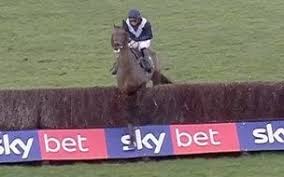
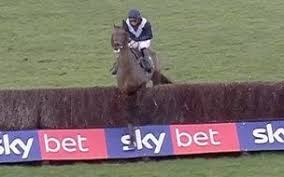
There is a particular cruelty in the way sport hands you its hardest decisions at its worst possible moments. Not in the calm of the parade ring, not in the weighing room with time to think, but in the final strides of a race, exhausted, at speed, with a crowd watching and instincts fighting rules. That is where Charlie Marshall found himself at Fakenham on 13th March, and that is where the full complexity of what we demand of amateur riders deserves honest examination.
Marshall has received a 12-day ban for failing to pull up Go On Chez when the horse was showing signs of fatigue in the closing stages of the Pointing Pointers Queen's Cup Grassroots Open Hunters' Chase. The stewards found against him. The sanction stands. None of that is in dispute here. But a ban is a legal verdict, not a moral verdict, and the two are not always the same thing.
A Race That Was Already Broken Before the Finish
Marshall is riding in a four-runner hunter chase over three miles. Three of his four rivals have already departed — one fallen, one pulled up, one unseated at the second last. He is, in effect, the last man standing. In those final strides, he is not making a decision in a vacuum. He is making it with competitive instinct, with months of preparation behind him, with the finish line visible. And he is making it as an amateur — not a professional with hundreds of hours of in-race welfare training, but a horseman doing what horsemen do: riding to the line.
Fellow rider Charlie Poste, who spoke with Marshall the following morning, offered the most grounded account available: that Marshall was gutted, acknowledged on reflection he should have pulled up, but that in the heat of the moment, with the race at their mercy, he carried on. Poste was direct about the mechanism: adrenaline. "Surely in your life you've been in a similar situation where you made what in hindsight was the wrong call." It is a simple observation but a profound one, because it locates the failure not in character but in the universal architecture of human decision-making under pressure.
What the Psychology Actually Tells Us
The psychological literature on this is unambiguous. When cognitive load is high and time is compressed to seconds, human beings do not access their rational, rule-governed selves. They access their trained instincts. For a rider shaped by hunting and point-to-pointing, the instinct is to finish. That is not a moral failure. It is how humans are wired, and it is why welfare education — if it is to mean anything — has to be trained into the body long before the race begins, not posted in guidance documents that no one reads mid-gallop.
When the Race Ends, the Damage Begins
What makes this episode additionally troubling is what happened after. Poste reported that Marshall received horrendous abuse on social media, including people expressing the wish that he should die. An amateur rider, competing at a grassroots hunter chase, makes a split-second judgement call that the stewards subsequently sanction — and in response, the internet mobilises its worst impulses. The disproportionality is not merely offensive. It is a signal of how badly we have lost the thread of proportionate moral reasoning in the age of viral outrage.
Yet here is the question racing has not thought to ask publicly: what post-race care was offered to Charlie Marshall? The horse — rightly — will have been attended by veterinary staff, assessed for fatigue, and monitored with professional care. That is the established protocol, and it matters. But the rider? He went home to a phone full of death threats. There is no equivalent protocol. There is no welfare pathway for the human being who made the call, got it wrong, and is now paying for it in ways no rulebook anticipated. Racing talks endlessly about its duty of care to its horses. It has conspicuously less to say about its duty of care to the young men and women who ride them.
The Broadcaster and the Burden of Nuance
Sport's broadcast media carries a particular responsibility in moments like this, because it shapes the first emotional response of tens of thousands of viewers before facts are fully established. Racing TV's coverage of the Fakenham incident, and Nick Lightfoot's commentary in particular, leaned towards condemnation in ways that left limited room for context or complexity. That is understandable in the heat of a live broadcast — welfare concerns are real, and no commentator should be expected to deliver a measured judicial analysis in real time. But the tone, once set, has consequences. One-dimensional verdicts delivered to large audiences migrate quickly to social media, where they lose whatever nuance remained and become the fuel for exactly the kind of abuse that followed. Racing TV's instinct to reflect welfare concerns robustly is correct; the calibration in this instance could have been kinder without being any less honest.
The Easiest Target in the Sport
There is a broader pattern here that deserves naming. Young jockeys — and particularly young amateur jockeys without professional representation or institutional backing — have become the most reliable targets in racing's disciplinary machinery. They are visible, they are identifiable, and sanctions against them are straightforward to administer and easy to defend publicly. Racecourses that stage small-field attritional contests on unsuitable ground face no equivalent scrutiny. Race officials who approve fields of four for a three-mile hunter chase over Fakenham in mid-March are not hauled before stewards to account for the conditions they created. The organisations that set field-size minima, design welfare frameworks, and approve race conditions operate with a leniency that stands in conspicuous contrast to the rigour applied to the individual rider in the final furlong. Racing's disciplinary culture, in short, flows downhill. It settles on the least powerful person in the room.
Should All Judgement Sit With the Jockey Alone?
The current framework places the entire burden of the welfare decision onto a single individual operating under extreme duress, with no real-time support and no mechanism for external intervention. The racecourse veterinary team, the stewards, the race officials — all of them are watching. None of them can act in time. The rider is alone.
That is not a system designed for optimal welfare outcomes. It is a system designed for administrative simplicity. If racing genuinely wishes to embed welfare decision-making into its most chaotic moments, it needs to ask whether individual post-hoc punishment is the right — or the only — instrument available. Other high-stakes environments, from aviation to surgery, have long recognised that systemic failure is rarely the product of one person's bad judgement. It is the product of conditions that made bad judgement more likely and good judgement harder.
Marshall did not design the conditions in which this race was run. He did not set the field size, create the culture, or write the welfare guidelines. He arrived, he rode, and in the crucible of the final furlong he made a call that the stewards judged to be the wrong one. That judgement may well be correct. But sympathy and accountability are not mutually exclusive. The man who broke the rule was not a callous actor. He was someone caught in the oldest trap in sport: the gap between what you know you should do and what your body does when the pressure is real and the seconds are gone.
After the Race: Two Patients, One Protocol Missing
Go On Chez will recover. The horse will be monitored, rested, assessed and returned to training when professionals judge him ready. But the parallel question — what structured support exists for a rider emerging from a high-pressure incident into a storm of public condemnation — has no equivalent answer in racing's current welfare architecture. No mandated debrief. No psychological first aid. No pathway to professional support. The sport that invested so heavily in equine welfare infrastructure has treated the human side of the equation as an afterthought. If we are genuinely serious about welfare as a principle rather than a brand, that asymmetry needs to be confronted and remedied.
A Sport That Claims to Put Welfare First Must Prove It
Welfare is not a single-species concern. It encompasses the horse. It encompasses the rider. And it encompasses the responsibility of those with platforms — broadcast or regulatory — not to amplify a moment of human error into a public humiliation that leaves a young man fielding death threats the following morning. The 12 days Marshall sits out are racing's answer to what happened at Fakenham. The social media abuse, the unsympathetic initial broadcast tone, and the institutional silence on rider welfare are racing's unacknowledged answer to how it treats the humans in its care.
Both answers are inadequate. And the sport that claims to put welfare first should have the honesty to say so.