“Satire so sharp, it cuts deeper than the truth.”
Racing's BHA New Chair Was ‘Hiding in Plain Sight’. Was Anyone Really Looking?
Simon Cox has officially become the BHA chair on October 1. This appointment follows a process described as open by the governing body, while Peter Savill refers to it as secret. The decision was influenced by a committee member with three years of experience on another board with Cox.
HORSE RACINGGAMBLINGBUSINESS
Ed Grimshaw
7/23/20267 min read
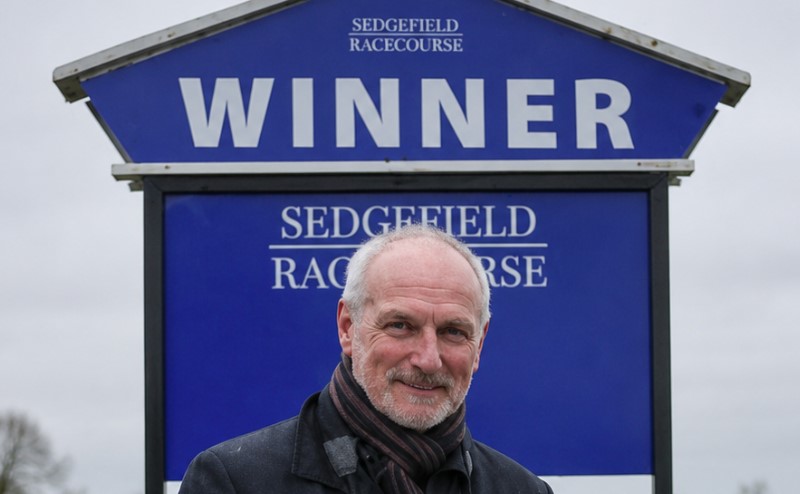
Simon Cox already had a seat, a title and what amounted to a parking space inside British racing's governing bodies before anyone rang a recruitment firm to go and find him. That's the detail worth sitting with as he takes the chair of the British Horseracing Authority on 1 October, arriving after a process the BHA's own account frames as thorough and above board, while one of the men it rejected describes the same exercise as conducted “in secret, behind closed doors.” Both descriptions were written about the same five-person committee, the same six-or-so weeks, and the same three named finalists. They cannot both be right, and the gap between them runs considerably deeper than a disagreement about vocabulary. Racing generates enough genuine drama at 2.10 most afternoons without manufacturing more of it in the boardroom.
Two Accounts of the Same Process
Start with what isn't contested. Lord Allen resigned in March, having failed to get racing's stakeholders to agree the independent-board reforms he'd been brought in to deliver. An interim Nominations Committee was formed to find his replacement: three independent BHA directors — Kyrsten Halley, who chaired the committee, Tara Warren and Raj Parker — alongside Louise Stewart, Chester's chief executive and the Racecourse Association's nominee, and Philip Newton, put forward jointly by the Racehorse Owners Association, the Thoroughbred Breeders' Association and Licensed Personnel. A recruitment firm, Elevate Talent, ran the search, and the shortlist reportedly ran to five names, though only Cox, Savill and Batters have ever been publicly identified.
The BHA's version of what happened next is a recruitment exercise that was thorough, competitive and fair. Savill's version, delivered after his rejection, is considerably less flattering: he says the committee never asked to examine the detailed reform plan he claims was backed by up to 250 owners, trainers, breeders, bloodstock agents and racing managers, and that the panel seemed more interested in a candidate's approach to consultation and collaboration than in their grip on the industry's actual problems. He isn't a disappointed newcomer with no standing to say so — he ran the BHA's predecessor body, the BHB, for six years between 1998 and 2004, and has spent the past few years rebuilding a public profile as a reform advocate. His account carries an institutional memory a first-time applicant's wouldn't.
Confidentiality itself isn't the problem here. Senior appointments routinely involve private deliberation, and nobody sensible expects a nominations committee to live-stream its interviews. The real complaint is that nothing beyond the outcome was ever put on the record: no published criteria, no minuted rationale beyond a statement written once the winner was already chosen, and no account of what the interviews actually covered available to anyone outside the room.
The Man Who Was Already There
Start with what Cox already was before Elevate Talent was ever engaged. He'd sat on the Thoroughbred Breeders' Association board since 2021, latterly as chairman of its National Hunt committee. He chaired the BHA's own Jump Pattern Committee — appointed to that post by the very organisation whose top job he's just been given. He sat on the High Quality Horse Group, and had previously served on the Professional Jockeys Association board. By the time the search opened, Cox wasn't an unknown being tested against the field; one Racing Post profile, published the day his appointment was confirmed, put it in four words: he'd been “hiding in plain sight.”
One of the five people who decided his case knew him better than most. Philip Newton, the committee's industry appointee for owners, breeders and licensed personnel, has chaired the TBA since October 2023. Cox has sat on that same board since 2021, as chairman of its National Hunt committee — a role that puts him, inside the TBA's own governance structure, directly under Newton. The TBA's 2024 AGM minutes list the two men on the board together, the meeting itself “headed by TBA Chairman Mr Philip Newton.” As recently as April this year — three months before the BHA's Nominations Committee reported its recommendation — Newton wrote a column crediting Cox by name for having “ably steered” TBA committee work. That's not a passing professional acquaintance; it's a sitting chairman publicly vouching, in print, for the man he was about to help assess for British racing's top job, in the same season he was doing the assessing. When Joe Saumarez Smith's own term as chair ended in 2023, he recused himself from the committee choosing his successor — a small, deliberate, public step. There's no equivalent record here, and the BHA has never published a conflicts policy for its Nominations Committee at all.
That doesn't make Cox the wrong choice — deep institutional knowledge is a defensible qualification, and it's precisely the case Savill made for himself. None of it proves the outcome was fixed before the search began, either. But a six-or-so-week hunt that ends with the man who already held a seat at three of racing's governing tables, assessed in part by his own board chairman, isn't much of a search. It is a curious kind of talent hunt that concludes by rediscovering someone who already had a parking space in the building.
Equal Treatment, Tested Twice
Baroness Minette Batters adds a second data point. Told, in her own account to the press, that she “wasn't considered to be a suitable candidate,” she's now at least the second time this precise scenario has played out — a Spectator column earlier this year recounted that she'd also applied for the chair's job during the 2023 process that appointed Allen, and reportedly wasn't even granted an interview that time. Two rounds, two rejections, and on neither occasion has the BHA offered anything beyond a brief dismissal relayed by the candidate herself. Set that against the volume of considered, on-the-record praise heaped on Cox once he'd won — detailed remarks from the committee chair, the interim BHA chair, and the Thoroughbred Breeders' Association's chief executive, all published the same day. Equal treatment isn't only about whether the same criteria applied to everyone. It's also about whether losing candidates get anything like the explanation the winner gets in praise.
What Actually Got Examined — and What Didn't
This is where Savill's complaint and the committee's own language sit closest together. Halley's statement on Cox, issued the day his appointment was announced, said he'd “articulated a clear and compelling plan” for governance, growth, welfare and government relations — the kind of specific praise a committee only produces once it has actually sat through a plan being presented and tested. Savill's claim is the mirror image: his own plan, backed by up to 250 industry figures, was never asked for, never discussed, never engaged with at interview at all.
Strictly read, the two claims don't contradict each other — Halley's statement describes what the committee found in Cox, and says nothing about what it did with Savill's plan. What's notable is that the BHA has never addressed Savill's specific allegation either way. An organisation capable of a fulsome, detailed statement praising the winning candidate's plan has said nothing at all about whether a losing candidate's was ever reviewed.
“Silence doesn't prove Savill's account. It doesn't rebut it either — and rebutting it would have cost the BHA one sentence.”
There's a second layer to this, and it goes to the heart of Savill's complaint rather than the edges of it. His account was that the panel valued a candidate's approach to consultation and collaboration over their grip on the industry's actual problems. Set that against what the committee actually praised in Cox — a candidacy built, on the public record, almost entirely around consensus and institutional fluency, spanning the TBA, the PJA, the BHA's own Jump Pattern Committee and the High Quality Horse Group. Savill's pitch was the opposite: a detailed, occasionally confrontational plan for change, and a track record trainer Michael Dods, reacting to his rejection, suggested had left the committee “frightened he will rattle cages.” This doesn't prove the committee deliberately favoured a consensus-builder over a disruptor. But if that is what happened, the record would look exactly like this: warm, specific praise for the collaborator's plan, and total silence on whether the disruptor's was ever read.
Why the Process Matters More Than the Man
Since 2023, the chair's office has been held by Saumarez Smith, then Lord Allen for six turbulent months, and now Cox — a role reportedly worth about two days' work a week, for an organisation whose incoming leader inherits, as one trade headline put it, “a £250m threat, a minister who won't meet racing and governance chaos.” A sport that keeps changing its chair, and keeps triggering disputes about how it does so, has a process problem that outlasts any individual appointment. Cox may turn out to be an excellent chair; several well-placed figures who know him clearly believe he will be. But an organisation that wants that judgement trusted needs a selection process robust enough to survive scrutiny on its own terms — not one that has to be defended after the fact by insisting, without much to show for it, that it was open all along.
What Should Change
Fixing this doesn't require reinventing British racing's governance from scratch, only doing what most well-run public and charitable bodies already treat as routine: publish the criteria before the shortlist is drawn up, record what was actually put to each candidate, and log declared conflicts before deliberations begin rather than leaving outsiders to reconstruct them later from AGM minutes.
The cost of not doing it isn't abstract. Lord Allen took office with a mandate nobody seriously disputed, and was gone within six months, undone by an industry that wouldn't stand behind him once the reforms got difficult. Cox takes office carrying a live dispute about how he got the job at all — at precisely the moment the sport needs him to push through unpopular decisions on fixtures and funding, with a government minister already declining to engage and a £250m threat still unresolved. A chair whose legitimacy is contested doesn't get a honeymoon; he spends the start of his term defending the process instead of using it. Savill's 250 backers and Batters' supporters won't be talked out of their view by a press release — they'll simply stop believing the next one. And the next serious reform candidate racing produces will be watching exactly how the last two were treated before deciding whether the job is worth the humiliation of applying for it. That is the actual risk in all this: not that Cox turns out to be the wrong chair, but that British racing has built a selection process that quietly teaches its most capable people not to bother.