Poverty Pantomime: How the Child Poverty Industry Became the Church of State-Sanctioned Irresponsibility
State-Sponsored Sentimentality: The Cult of Fake Empathy
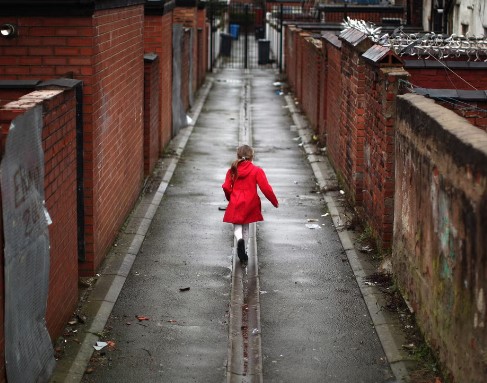
The most dangerous lies are told in whispers, wrapped in warm language and spoon-fed to the electorate like comfort food for the conscience. "No child should go hungry in the sixth-richest nation on Earth," they bleat, as if reciting a sacred mantra rather than an ideological ambush. Behind this sentimental sleight-of-hand lies a vast apparatus of subsidised failure, where child poverty is not a national shame to be eradicated but a lucrative moral racket — an engine of endless handouts, institutionalised helplessness, and aggressive public manipulation masquerading as compassion.
“Child poverty” is no longer a statistic — it’s a sacrosanct narrative. An unchallengeable totem. A rhetorical bludgeon with which to silence any heresy against the holy church of welfare expansion. But the truth is uglier, colder, and infinitely more offensive to the Instagram empathy class: this entire crusade is less about helping children and more about absolving adults of failure — personal, moral, and structural. We are not solving poverty. We are subsidising it, sanctifying it, and calling it progress.
The Myth of the Starving Waif: What Poverty Really Means
Let us first destroy the premise. The child “living in poverty” in Britain today is not Dickens’ Oliver Twist. He is more likely to have a television in his bedroom, a mobile phone in his pocket, and a streaming subscription on tap — courtesy of a benefits system that now rivals the GDP of some small nations. The bar for poverty has been quietly redefined into oblivion. Relative poverty — earning less than 60% of the median income — means we have institutionalised the absurd idea that inequality equals deprivation. By this logic, half the population will always be “poor,” no matter how affluent they become, unless we all miraculously earn the same and live in matching IKEA showrooms.
But what makes this truly poisonous is that we’ve elevated inequality from an economic condition to a moral crisis — and moralised it selectively. A family of five where no one has worked in three generations is held up as a symbol of structural injustice. A single mother of four by three absent men is framed not as a cautionary tale but as a heroic struggle. Government is no longer a safety net. It is now a substitute parent, spouse, and provider — and, like all bad substitutes, it enables the very dysfunction it claims to mitigate.
State-Sponsored Sentimentality: The Cult of Fake Empathy
Of course, this grotesque theatre needs a soundtrack — and it comes in the form of teary-eyed BBC specials and Guardian op-eds penned by the emotionally incontinent. Each presents the same fraudulent dichotomy: either you support pouring more billions into a black hole of dependency, or you are a child-hating sociopath who would personally snatch porridge from a toddler’s spoon. This is not debate — it is emotional blackmail.
And the consequences of this sentimental tyranny are grim. Real social reform is impossible under conditions of weaponised empathy. You cannot point out the corrosive effects of fatherlessness, illiteracy, drug abuse, or chronic worklessness without being branded a bigot. So the real problems — the ones that destroy life chances far more than income brackets — are buried beneath a mound of comforting lies and bureaucratic jargon.
What you get instead is a welfare labyrinth that trains people in the art of remaining poor: a system that penalises marriage, disincentivises work, and pays out more for dysfunction than for discipline. We have become so terrified of appearing judgmental that we now openly reward life choices that breed instability and hardship — all while chanting the mantra of “supporting children” as if they were born by immaculate conception, without any adult decisions involved.
From Working-Class Grit to Benefit-Class Entitlement: The 1970s and Now
Contrast this with the Britain of the 1970s — that supposedly drab decade of strikes, spam, and brown wallpaper. Yes, it was rougher. Yes, children wore hand-me-downs, and schools dished out physical discipline with a ladle. But even in the bleakest council estate, there was still a sense of hierarchy and responsibility. Fathers were often present. Working-class pride meant you didn’t take a handout unless you absolutely had to. Benefits were temporary shame, not a career plan.
Fast-forward to today’s moral sewer, where entire boroughs operate as economic dead zones propped up by welfare scaffolding. Where multi-generational unemployment is not a scandal but a statistic. Where state schools double as feeding centres and the government is expected to bankroll not just food and housing but moral fibre itself. This isn’t progress. It’s a regression into a permanent adolescence — with the state cast as mummy, endlessly mopping up the mess.
And of course, no moral crusade is complete without a puritanical sidebar. Enter the 2025 gambling tax — pitched as a righteous crusade against addiction but functioning, in practice, as another grubby revenue grab. Ministers, flanked by solemn psychologists and glum bishops, announce it as a public health intervention. In truth, it’s just another way for the state to monetise misery while claiming the high ground. The same zealots who once warned against the nanny state now hurl themselves at any excuse to hike a tax — provided it can be cloaked in the language of protecting children, saving lives, or “levelling up.” It's Victorian moralism with a digital dashboard, and it reveals the truth of modern government: not an arbiter of justice, but a vending machine for virtue-signalling policy, paid for by anyone with a vice.
The modern child poverty industry doesn’t want to fix the problem. It wants to preserve it — to curate suffering like a national heritage site. The NGOs and lobbyists and “anti-poverty campaigners” have become gatekeepers of the status quo, because their careers depend on it. A truly empowered, self-reliant working class would put them all out of a job. Which is why they must continue to churn out ever-more inventive measures of hardship — “digital poverty,” “period poverty,” “furniture poverty” — each more absurd than the last, but each justifying further taxpayer largesse.
The Real Cruelty: Keeping the Poor Poor for Political Gain
Here’s the ultimate irony: those who most loudly weep for poor children are the ones most invested in keeping them poor. Because every child raised in dependency is a future vote — for more state, more handouts, more bureaucracy. The poverty industry is not about lifting people out. It is about keeping them in — permanently, generationally, obediently.
What Britain needs is not a bigger benefits budget or a new round of breakfast clubs. It needs a cultural reckoning. It needs to reclaim the language of duty, structure, and delayed gratification. It needs to stop coddling dysfunction and start punishing the politicians, pundits and activists who’ve made a fetish out of failure.
Real reform would mean ending the perverse incentives that reward broken families and punishing the bureaucratic empires that have made dependency a growth industry. But that would require honesty — and honesty, unlike welfare, cannot be distributed by direct debit.
So instead, we’ll continue down this path of national infantilisation, held hostage by fake empathy and pious delusion. And the children we claim to protect will inherit not just poverty — but the ideology that made it permanent.