“Satire so sharp, it cuts deeper than the truth.”
England Doesn't Need a Scapegoat. It Needs a Mirror.
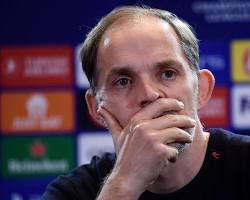
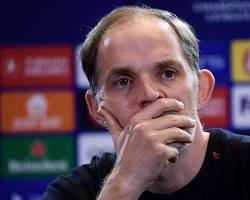
Thomas Tuchel is being marched into the wilderness by talkSPORT's switchboard. Somebody ought to ask why we keep building one of those every four years.
FOOTBALLSPORTCULTURE
Ed Grimshaw
7/18/20265 min read
The Man Who Carried Jerusalem's Sins
Once a year, on the Day of Atonement, the priests of ancient Israel would lead a goat into the temple courtyard, lay their hands on its head, and formally transfer onto it every sin the nation had committed since the last one. Then they marched the animal out into the wilderness and left it there. The goat, you will notice, had done nothing wrong. It hadn't missed a harvest, started a war, or capitulated to a back five with twenty minutes to go. It simply happened to be standing nearby when somebody needed to feel better.
The Greeks had a version with an actual human being — the pharmakos, fed at the city's expense for a year and then ritually expelled whenever plague, famine or a catastrophic military defeat required a culprit. The philosopher René Girard spent much of his career arguing that we never really stopped doing this. We just stopped using goats.
All of which, in a way Girard would probably have found darkly amusing, brings me to Thomas Tuchel.
Same Old Story
On Wednesday night in Atlanta, England went 1-0 up against Argentina courtesy of Anthony Gordon's finish in the 55th minute, and for about twenty-five minutes it looked, astonishingly, as though sixty years of hurt might actually be over. Then Tuchel withdrew his own goalscorer, brought on a third defender, and folded England into a back five so deep it was practically queuing behind the goal. Between Gordon's strike and Lautaro Martínez's 91st-minute header, England had 12 per cent of the ball. Twelve. Enzo Fernández equalised, Martínez won it, and Argentina reached a second consecutive World Cup final while England went home to the national inquest, which — this being England — took roughly four minutes to turn into a trial.
A Nation With Previous
We are, it should be said, extremely well practised at this. David Beckham was hanged in effigy outside a pub in south London after being sent off against Argentina in 1998. Steve McClaren became "the wally with the brolly" for standing under an umbrella at Wembley in 2007, as though the umbrella, rather than the football, had been the problem. Southgate reached two European Championship finals and a World Cup semi-final, further than any Englishman bar Sir Alf Ramsey, and was still edged out of the door within a fortnight of the second. Tuchel is only the third foreign manager the FA has ever trusted with the job, after Sven-Göran Eriksson and Fabio Capello, and he opened his first press conference by joking he was "sorry" to hold a German passport — a line that has aged, this week, like milk in a heatwave.
The Switchboard Lights Up
talkSPORT's phones apparently haven't stopped ringing since the final whistle, and the presenters have matched the callers rant for rant. One caller wanted Tuchel to "leave tomorrow." Jamie O'Hara didn't bother with a second sentence: "Sack him! Sack him now!" Jason Cundy called the tactics "cowardly," a word that had become, by Thursday morning, the unofficial consensus verdict of British football punditry — used independently by Cundy, by World Cup winner Iker Casillas an ocean away, and by roughly half of Simon Jordan's phone-in. Jordan himself spent the best part of an hour with co-host Jim White dismantling the substitutions minute by minute, before turning on Tuchel's post-match suggestion that England's passivity might be cultural rather than tactical. Even Adrian Durham, mid-Breakfast, managed to needle his own colleagues by dragging an unrelated Arsenal grievance into the inquest, and was promptly accused on air of settling old scores rather than analysing a football match. Mark Goldbridge wanted Tuchel gone before the team coach had left Georgia. It is a proper, full-throated pile-on, conducted with the total sincerity of people who genuinely believe that with the right man in the dugout, Argentina's finest generation since Maradona would simply have stood aside and let us through.
The Grief Beneath the Rage
Strip away the phone-ins, though, and what's underneath the fury isn't really anger. It's grief, and English football is spectacularly bad at telling the two apart. Pubs from Newcastle to Truro went silent in the same second, then briefly loud, then silent again — the particular rhythm of a room watching something die that it had, for twenty-five increasingly delirious minutes, convinced itself was finally about to live. Fans who'd taken the day off work, remortgaged a fortnight in Atlanta, or simply queued since breakfast for a seat in a fan park, weren't really mourning one football match. They were mourning the fifth or sixth time in twenty years that this exact door has swung open in front of England and then quietly, almost politely, shut again. The psychologist Elisabeth Kübler-Ross never wrote her five stages of grief with the Three Lions in mind, but English football manages to compress denial, anger and bargaining into a single commercial break. It's the acceptance that never quite arrives — because genuine acceptance would mean admitting the pattern belongs to the team, the pathway and the culture that produced it, not to whichever manager happens to be standing in the technical area when the door swings shut.
In Tuchel's Defence
Here's the inconvenient bit. Tuchel used almost exactly the same low block to beat Mexico away at the Azteca earlier in this tournament, a result England fans were delighted to take at the time. This time it ran into a side built around a 39-year-old Messi, who has spent two decades punishing precisely this kind of retreat. Gary Neville, who warned back in October 2024 that overlooking English candidates like Eddie Howe raised serious questions for the FA, has this week found a fresh complaint — that Tuchel, post-match, suggested England's passivity might simply be "not in our DNA" the way it is in Spain's or Argentina's. Neville doesn't much like that theory. I suspect the players it was aimed at like it even less. But notice what's happening here: the man being fed to the wilderness by the nation has started looking for a wilderness of his own to feed someone else to.
The Cathartic Culprit
Which brings us back to the goat. Sacking Tuchel — and the FA, to their credit, seem minded not to, having reportedly already recommitted to him through to the home Euros in 2028 — would feel wonderful for about a fortnight. It would also let England avoid the harder conversation: why the identical collapse has now happened against Croatia, Italy and Argentina under three different managers holding three different passports; why a squad this expensively assembled keeps arriving at the final furlong and quietly sitting down. Naming Tuchel the culprit is cathartic precisely because it is cheaper than the alternative, which is admitting that, on the night, England simply weren't good enough — and haven't been, at this exact hurdle, for sixty years.
The Short Version
Sack Tuchel if it makes you feel better. It generally does, for about a month. Then you'll need a new goat, and at the rate we're going through them, we're fresh out of Germans.