Coral Eclipse Preview: When The King Stays Home, The Court Must Decide
There are races that define a season and races that merely decorate it, and the Coral Eclipse at Sandown on Saturday belongs emphatically to the first category even in a year when the man widely acknowledged as the best horse in the world has looked at the invitation and politely declined to attend.
HORSE RACING
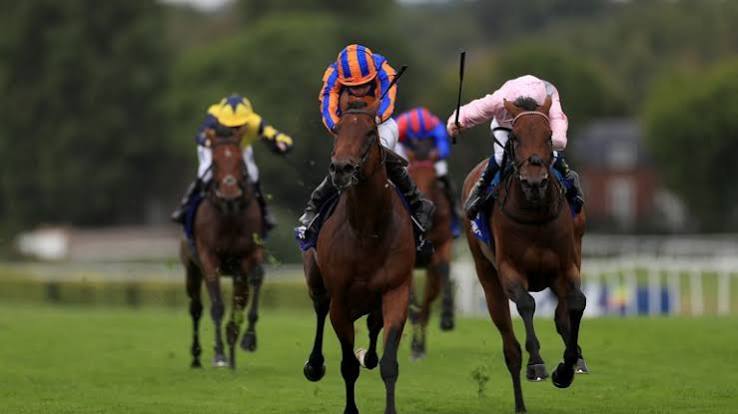
There are races that define a season and races that merely decorate it, and the Coral Eclipse at Sandown on Saturday belongs emphatically to the first category even in a year when the man widely acknowledged as the best horse in the world has looked at the invitation and politely declined to attend.
Ombudsman will not be at Sandown. The connections of the Gosden colt — who produced what the BHA's head handicapper called "the best performance we have seen in the world in 2026" when destroying the Prince of Wales's Stakes field at Royal Ascot — have elected instead to keep their powder dry for the Juddmonte International at York in August. The decision is entirely rational. It is also, in the way of all rational decisions, just slightly dispiriting, like being told that Beethoven won't be conducting tonight but his deputy is very accomplished. We are sure he is. It is not quite the same thing.
And yet into the space he vacates steps a race with rather more claim on history than it sometimes receives credit for. The Eclipse, you see, does not need a single transcendent horse to justify itself; it has a habit of creating them. Brigadier Gerard came to Sandown in 1972 carrying the weight of fourteen consecutive victories and the knowledge that Mill Reef — the only horse capable of threatening his supremacy — had been kept away by illness, which ought to have made the afternoon feel slightly hollow. It did not. He beat Gold Rod by a length on softening ground with the authoritative ease of a champion who knows precisely how much effort is required and does not waste a drop more. He won seventeen of eighteen races in his career, and when he was finally beaten at York it felt, to those who had watched him, like a small tear in the order of things.
Dancing Brave came here in 1986 and dispensed with the argument in a fashion that was close to insulting. Shahrastani, who had won the Irish Derby by eight lengths, could manage only fourth as Pat Eddery let Dancing Brave find his stride and the field simply disintegrated. Four lengths was the winning margin. It felt like more. That same explosive burst of pace would take Dancing Brave to Arc glory at Longchamp later that autumn, and those who saw both performances will tell you the Eclipse was the moment they understood they were watching something that does not come along very often.
Sea The Stars in 2009 was, if anything, more methodical and rather more magnificent. John Oxx, a man constitutionally suspicious of hyperbole, had already watched his colt win the Two Thousand Guineas and the Derby, and when they came to Sandown he surveyed the task with the quiet satisfaction of a craftsman presented with a problem he has already solved. Mick Kinane committed earlier than intended as Rip Van Winkle loomed challengingly two furlongs out, and Sea The Stars responded in the way of great horses — with an acceleration that was not frantic, not showy, simply definitive. "He only does enough," Oxx said afterwards, "but enough is enough if he wins." He beat Rip Van Winkle by a length and a half. The Derby-Eclipse double: last achieved by Nashwan in 1989, done again here with an air of serene inevitability.
Golden Horn in 2015 was the most recent addition to this roll of honour of which this race is rightly proud, and Frankie Dettori — who has spent a career collecting great days as other men collect stamps — allowed himself afterwards the admission that the three-year-old beneath him that afternoon was, right then, the best he had ridden. Gosden had told him to ride a cool race. He rode a cool race. The Grey Gatsby, a formidable rival, was beaten two lengths and Golden Horn's unbeaten record remained intact.
The story this year is youth against age and France against Britain, and the central character — whether he likes it or not — is a three-year-old bay colt by Wootton Bassett who last month led home two stablemates in the Prix du Jockey Club at Chantilly and pulled remorselessly clear to score by seven lengths in a manner that left the watching press reaching for adjectives not yet worn thin by overuse. Constitution River, trained by Aidan O'Brien, is the favourite for Saturday and the reason for that is simple: he is the best three-year-old in Europe, and on the form of the French Derby very possibly better than that. The question the Eclipse asks — and it is the only question that matters on Saturday — is whether he is ready to be tested by older horses who have already answered it themselves.
Ryan Moore, who won this race in 2021 on St Mark's Basilica and has since added victories on Paddington and City Of Troy, will be on his back, and Moore in the Eclipse is a combination that history has learned to take seriously. A win on Saturday would move him within two of Lester Piggott's record seven victories in the race, a thought to warm any right-thinking heart.
But if Constitution River is the headline, Gethin is the story beneath it that deserves rather more column inches than it may receive. Owen Burrows's four-year-old went to the Brigadier Gerard Stakes at Sandown last month and lost narrowly to Ombudsman while receiving seven pounds from the world's best horse. Take those seven pounds away and the result becomes considerably more interesting. James Doyle, who rides him on Saturday on level weights against the lot of them, is a man who has rarely been given a horse of quite this quality to carry his considerable talent, and the combination of trainer and jockey, each quietly determined and each with something to prove in the highest company, has the feel of a team whose moment might have arrived.
Calandagan brings the accumulated dignity of the Aga Khan's silks and the Francis-Henri Graffard stable at Chantilly, and he brings something more tangible still — a Dubai Sheema Classic in his back pocket from March and a Group 1 record that stretches across three continents and half a decade. He is the nearest thing this field has to a seasoned statesman, and statesmen, when the occasion rises to meet them, occasionally remind the younger men around them that there is no substitute for having been here before.
At least six go to post in a race worth a million pounds, on a July afternoon at a course that never quite receives the credit its character deserves. Sandown asks more of a horse over its final two furlongs than almost anywhere in Britain, and on good to firm ground with the summer baked into it the pace will be honest and the questions unflinching.
By teatime on Saturday we will know whether Constitution River is what his Chantilly performance suggested he might be, or whether the step up in class reveals something that the French form did not. We will know whether Gethin, given his best opportunity, takes it. The Eclipse always tells us. That is, among its many considerable virtues, perhaps the one most worth admiring.
Coral Eclipse, Sandown Park, Saturday 4 July 2026, 3.35pm. Field of six over 1m2f. Prize fund £1,000,000.