Chepstow, Bangor and Ffos Las under threat
One word would have ended it. Instead he talked for a paragraph and said nothing, while three racecourses wait to find out if they have a future.
HORSE RACINGPOLITICS
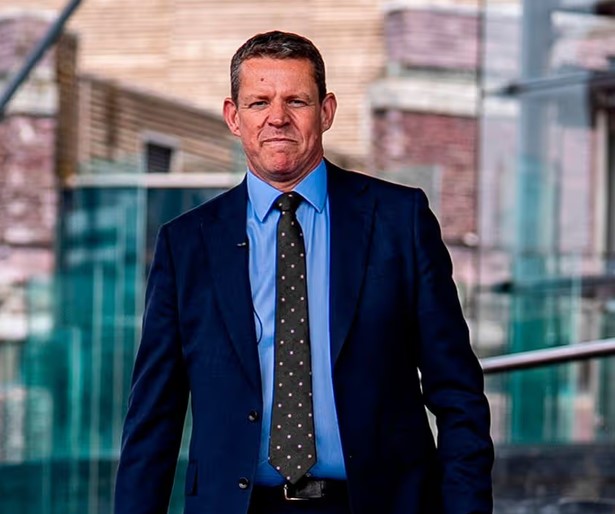
There is a particular species of British politician who has never, in the whole of a long and blameless life, run anything, sold anything, built anything, or been responsible for a payroll, a profit margin, or a horse. He has instead spent his career standing in front of cameras describing things that other people did, before eventually deciding that describing things was so enjoyable he might as well start doing it to Parliament instead. I have enormous respect for people who muck out stables at five in the morning, price up a book at Chepstow, or keep a small racecourse solvent through a wet winter. I have considerably less for people whose entire professional experience of risk is the possibility of fluffing a link into the six o'clock news.
Which brings me, with the elegance of a man who has planned this all along, to Rhun ap Iorwerth, First Minister of Wales, who spent almost twenty years as a BBC presenter — Dragon's Eye, the Politics Show, a programme about the Romans, another about the Eisteddfod — before concluding that having narrated Welsh public life for two decades qualified him to run it. It is a bit like spending twenty years commentating on the Grand National and then announcing you're ready to ride in it.
Last week this same man was asked, in the Senedd, whether he intended to ban jump racing in Wales. It was Cai Parry-Jones, a Reform MS, who asked it, and he asked it in words of one syllable, roughly: the Senedd banned greyhound racing in March, it dies out completely by 2030, Plaid Cymru's own Westminster leader Liz Saville Roberts has already called for jump racing to go the same way — so will you rule it out, yes or no?
Now, Liz Saville Roberts deserves a sentence of her own, because she is not some passing outrage merchant. She was a journalist, then a further education lecturer, then a county councillor, and is now the sort of career parliamentarian who has spent so long inside institutions that she has apparently begun mistaking Chepstow racecourse for one. She has never, as far as I can establish, trained a horse, backed one, mucked one out, or lost a fiver on one each-way at Ffos Las on a wet Tuesday. But she is entirely confident that the people who have spent their lives doing exactly that should simply stop, on her say-so, because the greyhounds went quietly and she rather liked how that felt.
Ap Iorwerth's response to Parry-Jones was a thing of genuine, if depressing, beauty. He did not say yes. He did not say no. He said that the greyhound vote had been a free vote, and that this was the case for most parties in the last Senedd — which is true in the way that saying "the weather has historically been variable" is true right before a hurricane takes the roof off. It answers nothing. It commits to nothing. It is designed entirely to let him walk out of the chamber having said several hundred words without a single one of them being pinnable to a headline. Twenty years of live broadcasting will teach a man that trick before almost anything else.
Here is what an actual leader does when handed the easiest question of his career: he says "no." One syllable. Free of charge. It ends the story, reassures three racecourses' worth of stable staff, and lets everybody go home. That he could not do it tells you precisely where this is going, and no amount of talk about free votes is going to un-tell you.
Because what's actually being gambled with here is Chepstow, Ffos Las and Bangor-on-Dee, and everyone who works at them. Chepstow alone stages the Coral Welsh Grand National every December, worth around £170,000 in prize money and the single biggest day in the Welsh sporting calendar that doesn't involve fifteen men falling on top of each other in Cardiff. Parry-Jones put the wider economic value at hundreds of millions of pounds a year and jobs from stable to bar. Nobody in the chamber disputed a single figure. They just couldn't bring themselves to promise not to switch it off.
And it will go exactly the way the greyhounds went: not by a minister standing up and banning it outright, which would at least have the honesty of an actual decision, but by the slow administrative strangulation Wales has now perfected — a review here, a welfare panel there, a committee report nobody reads until the fixture list has quietly halved. First the dogs. Then, presumably, the horses. I assume the next Senedd term will discover that sheepdog trials constitute coercive control of an unconsenting animal and that the Eisteddfod's male voice choirs are traumatising the tenors.
Now, in the interests of fairness, which costs me nothing and I dispense sparingly: jump racing does kill horses. The BHA's own 2025 figures put the fatality rate at 0.47 per cent — 133 deaths from 28,116 runners, against 0.10 per cent on the flat. That is a genuine number attached to genuine animals, and Cheltenham has had years bad enough to make the news for reasons nobody in racing enjoyed. Anyone claiming the sport carries no risk whatsoever is lying to you, and should be treated with the same suspicion as a politician promising a "free vote."
But 99.5 per cent of jump racing's runners come home without long-term injury, and that number has been improving for twenty years precisely because racing has spent two decades actually doing something about it — better ground, veterinary screening, softer fences — rather than the greyhound approach, which is to legislate the entire activity into non-existence and call it welfare. Banning something because it carries risk isn't policy. It's the total abdication of the responsibility to manage a risk properly, performed by people who have never had to manage anything harder than a diary.
So here's what I'd say to the First Minister and to the rest of the Senedd, since nobody currently paid to say it plainly is bothering. Answer the question you were asked, in a sentence, with a subject and a verb, the way people who've had actual jobs are expected to. If jump racing is safe in your hands, say so. If it isn't, publish the review now, not after the yards have quietly emptied. And perhaps send a couple of MSs to Chepstow on a wet Tuesday in February to watch what an actual day's work in this industry looks like, before they legislate away people whose jobs they clearly cannot picture.
Rhun ap Iorwerth had the chance to end this argument with one word. Twenty years of broadcasting taught him how to use several hundred instead and say nothing at all with any of them. That, in the end, is the real story here — not that Wales is about to ban jump racing, but that the man in charge of deciding won't tell you either way, and is rather hoping you'll get bored of asking before he has to.