British Racing's £4.4m Plaster on a £300m Wound: Why 2026's Fixture List Guarantees Continued Decline
The BHA watches horse numbers collapse and betting turnover haemorrhage—then responds with a 2.3% prize money increase. This isn't strategy
HORSE RACINGSPORT
The Diagnosis Problem: When Accurate Numbers Reveal Inadequate Strategy
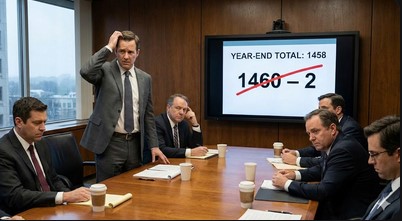
The British Horseracing Authority's 2026 fixture list deserves credit for one thing: it provides a remarkably clear window into how institutional paralysis operates. With 1,458 fixtures (down a statistically meaningless two from 2025's 1,460) and an additional £4.4m in prize money—roughly 2-3% uplift on a total pool estimated between £180-200m—the BHA has delivered a response so precisely calibrated to avoid meaningful change that it becomes a case study in strategic risk aversion.
But here's what makes the 2026 programme genuinely instructive: when you correct the apocalyptic rhetoric and examine the validated data, the inadequacy of the response becomes more damning, not less. The industry isn't facing a sudden 30% foal crop collapse; it's experiencing a grinding, multi-year erosion that leadership has watched happen in real-time whilst deploying precisely this kind of incremental intervention annually.
That's arguably worse.
The Reality Check: What the Numbers Actually Show
Let's establish the baseline accurately, because strategic critique requires empirical precision:
The Foal Crop Trajectory:
2022: 4,601 GB foals (Weatherbys/ITBA data)
2023: 4,338 GB foals
2024: 4,198 GB foals
This represents an 8.8% decline over two years—not the catastrophic 30% single-season collapse, but a persistent, accelerating trend that has now eroded roughly 400 foals annually. The three-year-olds entering training in 2027 will number approximately 9% fewer than those who entered in 2025.
The Strategic Implication: A sudden crisis permits emergency measures and potential recovery. A managed decline over multiple years, observed and documented by the regulator, followed by responses of this magnitude, suggests something more troubling: organisational acceptance of inevitable contraction. The BHA and the Horserace Betting Levy Board under its leadership aren't scrambling to address an unexpected shock. They're watching a predictable deterioration unfold and responding with adjustments that couldn't mathematically reverse the trend even under optimistic assumptions.
The Prize Money Arithmetic: Competing With Precision Inadequacy
The £4.4m injection specifically targets developmental races—Flat maiden/novice races now carry £10k minimum values; National Hunt novice chases receive £15k. This represents thoughtful tactical allocation within the constraint of available funding.
The problem isn't the distribution methodology; it's the quantum relative to competitive reality.
The UK-Ireland-France Prize Money Architecture:
While precise bridge numbers aren't published in official releases, the competitive gap is empirically demonstrable through per-runner and per-race analysis. French and Irish racing consistently deliver 30-50%+ higher returns across comparable race categories. On reasonable assumptions about field sizes and programme structure, achieving genuine parity would require UK prize money increases measured in the low hundreds of millions, not single-digit millions.
The BHA's 2026 intervention is strategically coherent—it identifies the right intervention point (developmental races to retain young horses)—but operates at roughly 2-3% of the scale required to materially alter owner decision-making relative to sending horses to Ireland or France.
The Analogy: You've correctly diagnosed that the patient needs major surgery. You've even identified which organ requires the procedure. But you're administering paracetamol and declaring the treatment plan complete.
The Premier Raceday Reversal: A Valuable Admission
Here's where the 2026 fixture list becomes genuinely interesting from a strategic analysis perspective: the BHA has cut Premier Racedays "by more than two-thirds" following the 2024-25 pilot programme.
This isn't expansion or doubling-down—it's retreat. And that retreat contains more strategic honesty than anything in the supporting press releases.
What This Reveals:
The Premier concept was launched with specific commercial targets: enhanced attendance, improved betting metrics, clearer customer proposition. The 2026 contraction implicitly acknowledges these weren't achieved at pilot scale. Rather than abandoning the framework entirely, the BHA is attempting to salvage the concept through severe reduction and tighter criteria. This is actually a form of strategic learning—rare enough in British racing governance to warrant acknowledgment. The problem is what it reveals about the organisation's hypothesis-testing process:
Year One: Launch ambitious Premier programme with transformative claims
Year Two: Programme fails to deliver claimed outcomes
Year Three: Contract programme by two-thirds but maintain conceptual framework
The Missing Step: Rigorous post-mortem analysis published externally, with specific data on attendance, turnover, customer satisfaction, and honest assessment of why the hypothesis failed. What were the attendance targets? What were the actual figures? What did customer research reveal about why the repositioning didn't resonate?
Without this transparency, we're left watching strategy iterations without understanding the diagnostic process. It's evidence-based governance performed in the dark.
The Existential Threat That Wasn't (But Still Matters)
The 2025 Autumn Budget delivered surprisingly favourable news for British racing, thanks also to effective campaigning by the body of racing: horserace betting was explicitly exempted from the new 25% remote betting duty applying from April 2027. Racing's 15% rate remains unchanged whilst remote gaming duty rises from 21% to 40%. This materially changes the threat landscape. Industry modelling (notably EY work commissioned by the BGC) had estimated that a unified higher rate on racing could remove approximately £300m from the funding model and eliminate thousands of jobs. That specific scenario has been averted.
But here's the strategic nuance:
The indirect pressure remains significant. Bookmakers face substantially higher gaming taxes (which generate far more revenue than racing bets), potentially compressing P&L and creating secondary pressure on racing sponsorship, media rights deals, and commercial partnerships. Additionally, the broader regulatory environment—particularly affordability checks—continues to exclude profitable punters systematically.
The Black Market Question:
Industry-commissioned modelling suggests up to several billion pounds of gross gaming yield could migrate to unregulated operators under tighter affordability frameworks. The precise quantum is disputed and robust measured outcome data aren't published, but the directional concern is legitimate: when you systematically exclude customers who demonstrate they can afford to bet significant amounts, they don't stop gambling—they find alternative channels. The betting turnover decline British racing experiences isn't hypothetical. What remains contested is how much reflects regulatory displacement versus organic market shift.
The Fixture List Mathematics: Why 1,458 Is The Wrong Number
Here's where systems thinking demands we challenge the fundamental architecture rather than its marginal adjustments.
The Core Constraint:
2026 will see approximately 9% fewer three-year-olds entering training compared to 2024
Average field sizes have trended downward over the past decade, recently hovering around 8-9 runners per race depending on code
Various industry analyses suggest that each reduction in average field size materially cuts betting turnover per race, often by high-single-digit percentages
The Strategic Arithmetic:
If you maintain fixture volume (1,458) whilst horse population contracts, mathematical inevitability delivers:
Smaller average field sizes
Reduced betting appeal per fixture
Lower per-race revenue for racecourses and bookmakers
Compressed economics for the entire value chain
The BHA's implicit assumption appears to be that horses will increase their racing frequency to fill the calendar. This has second-order consequences:
Accelerated depreciation: Horses racing more frequently in weaker company reduces their long-term value
Quality dilution: The best horses concentrate in the highest-value races, leaving an increasingly thin middle tier
International outflow: Owners with genuine quality increasingly look abroad for better prize money per start
The Alternative Framework:
A contraction to 1,200-1,250 fixtures (roughly 15-17% reduction) would:
Concentrate the existing horse population into genuinely competitive field sizes (10+ runners)
Eliminate the lowest-value meetings that destroy betting margins through thin fields
Materially improve per-fixture turnover (betting elasticity studies suggest 20-25% uplift is plausible with consistent stronger fields)
Create a more sustainable calendar for workforce retention
This isn't advocating managed decline—it's recognising that fixture proliferation causes decline when supply constraints bind. You're spreading inadequate inventory across excessive outlets, ensuring universal mediocrity.
The Ownership Economics Death Spiral
Training fees have been rising faster than general inflation at many yards—industry communication frequently cites mid-single-digit annual increases in the current cost environment—whilst centrally-distributed prize money grows only a couple of percent annually.
The Compound Effect:
Year One: Owner pays £30,000 training fees, expects 20% prize money ROI (£6,000) Year Two: Training fees £31,500 (+5%), prize money pool +2.5%, ROI slips to 19.4% Year Three: Training fees £33,075 (+5%), prize money pool +2.5%, ROI slips to 18.8%
Over a decade, this arithmetic becomes catastrophic. The negative arbitrage compounds relentlessly. Yet the 2026 fixture list assumes ownership levels will somehow stabilise despite these fundamentals.
The Rational Owner Response:
Either exit the sport entirely (explaining why foal crop declines persist) or shift investment to jurisdictions with better economics (Ireland, France). The £4.4m increase doesn't remotely alter this calculation for any owner conducting basic financial analysis. The typical British owner now receives approximately 20p in prize money for every pound spent on training costs. In Ireland, that figure exceeds 30p. In France, it approaches 40p. This isn't marginal competitive disadvantage—it's structural economic dysfunction.
What Strategic Competence Would Require
The frustrating element isn't that solutions are unavailable—it's that they're obvious and repeatedly documented, yet systematically not implemented. If the BHA and the regulatory framework had sought to arrest structural decline rather than manage it, the 2026 programme would feature:
1. Transparent Metrics Architecture
Published KPIs with quarterly reviews:
Average field size target (9.5+ runners)
Prize money-to-training cost ratio (25% as minimum threshold for viability)
Domestic foal crop recovery trajectory (targeting 5,500+ by 2028 breeding season—a 30% increase from 2024's 4,200)
Owner satisfaction metrics (NPS, renewal rates)
Workforce retention statistics
The Current Problem: No individual or body demonstrably faces consequences for strategic failure. Targets are either absent or so vaguely worded ("strengthen", "enhance", "support") that accountability is impossible.
2. Radical Prize Money Consolidation
Rather than distributing £4.4m across the entire programme in £500-£1,000 increments that no owner notices, eliminate the bottom quartile of races (those worth under £4,000 to the winner) and consolidate savings into genuine developmental opportunities.
Expected Outcome: Create meaningful financial incentives that actually influence behaviour, whilst simultaneously reducing fixture saturation and improving average field quality.
3. Breeder Stimulus Over Cosmetic Owner Incentives
The 2026 horse population is already determined; the 2028 population can still be influenced through immediate intervention. Triple Great British Bonus funding (potentially £15m+ injection) with guaranteed minimum values for domestic-bred winners creates a price floor for bloodstock and materially improves breeding economics.
Why This Matters: You cannot race horses that were never born. The 2024 foal crop of 4,198 needs urgent reversal through targeted breeding incentives, not marginal prize money adjustments for horses already in training.
4. Fixture Consolidation (The Unmentionable Solution)
Reduction to approximately 1,200-1,250 fixtures would concentrate horse population into competitive field sizes, eliminate calendar saturation, materially improve per-fixture economics, and create sustainable working conditions for the human workforce. Why It Won't Happen: Racecourses perceive fixture reductions as existential threats to individual businesses. The BHA, serving multiple constituencies with contradictory interests, defaults to compromise that optimises nothing. This is regulatory capture in its purest form.
The Cultural Diagnosis: Why Incrementalism Persists
The recurring pattern—modest adjustments to a deteriorating model—suggests deeper organisational pathology than mere strategic incompetence:
1. Accountability Vacuum
Prize money targets missed, attendance declining, turnover collapsing, foal crop eroding—yet leadership remains unchanged and strategies roll forward annually with marginal variation. No published post-mortems. No transparent metrics. No consequences.
When Brant and the team present these fixture lists, there's no accompanying analysis of how previous years' strategies performed against stated objectives. Did the 2025 developmental race initiative increase horse retention? By what percentage? What was the target, and what was achieved?
2. Consultant Theatre
The BHA commissions expensive external analysis (frequently £500k+ annually), produces sophisticated reports identifying structural problems, then selectively implements recommendations that don't require confronting powerful constituencies. This creates the appearance of strategic rigour without operational commitment.
3. Constituency Paralysis
Serving racecourses, bookmakers, owners, breeders, trainers, and punters with fundamentally contradictory interests produces perpetual compromise. Revolutionary change requires sacrificing one group's interests for the collective good—precisely what a consensus-dependent regulator cannot do.
4. Short-Term Planning Cycles
Annual fixture announcements preclude long-term structural reform. Five-year strategic plans with binding commitments would force uncomfortable conversations about which racecourses survive, which meetings are eliminated, and where the industry focuses limited capital.
The Premier Raceday Lesson: What We Can Learn From Contraction
The two-thirds reduction in Premier fixtures is worth examining more carefully, because it reveals both the best and worst of BHA strategic process.
What They Got Right:
Empirical testing of a hypothesis (Premier positioning improves commercial outcomes)
Willingness to abandon scale when results disappoint
Attempted salvage through refinement rather than either full expansion or complete abandonment
What's Missing:
Published data on what specifically failed (attendance targets? Turnover metrics? Customer research findings?)
Analysis of why the positioning didn't resonate (over-saturation? Insufficient quality gap? Customer confusion?)
Alternative hypotheses tested (would fewer, genuinely premium fixtures with materially higher prize money have worked?)
The contraction suggests empirical learning happened internally. The lack of transparency about what was learned prevents the industry from conducting proper strategic discourse. We're reduced to inferring from actions rather than understanding from published analysis.
This Is How Organisations Stay Strategically Mediocre:
They iterate through trial-and-error whilst keeping the diagnostic process proprietary. External stakeholders can't contribute to strategic development because they don't have access to the evidentiary base. The result is insular decision-making that mistakes internal consensus for market validation.
Conclusion: The Adequacy Paradox
The 2026 fixture list, examined with precision rather than rhetoric, reveals something more troubling than crisis-driven incompetence: it demonstrates adequate strategic thinking deployed at inadequate scale in response to challenges that demand transformation. The BHA has correctly identified developmental races as the intervention point. They've allocated £4.4m to minimum values that will provide marginal support. They've contracted the failed Premier experiment rather than doubling down. They've maintained fixture volume to avoid racecourse bankruptcies.
Every individual decision contains defensible logic. The aggregate effect is strategic insufficiency.
The Killer Question Refined:
It's not "How did Brant Dunshea and the BHA Board miss the crisis?"—they clearly see it. It's not "Why don't they know what to do?"—the solutions are documented. The real question is: What structural constraints prevent a regulator from implementing interventions at the scale required to alter the trajectory?
Until that question is answered honestly—which requires examining regulatory capture, constituency conflicts, accountability architecture, and governance culture—British racing will continue to receive annual fixture lists that deploy precision inadequacy: strategies that are directionally correct, tactically sophisticated, and utterly insufficient to the moment. The 2026 programme will be studied not as an example of strategic incompetence, but as a textbook case of institutional constraints producing rational organisational behaviour that guarantees collective failure.
And perhaps most damningly: none of this is surprising. The 2025 fixture list showed similar patterns. As will, almost certainly, the 2027 version. Strategic stagnation becomes self-fulfilling when the cost of transformation exceeds the organisation's capacity to impose it.
The tragedy: British racing doesn't lack analysis, doesn't lack solutions, doesn't even lack acknowledgment of the problem. It lacks an institutional mechanism capable of overriding constituency paralysis and implementing necessary sacrifice for long-term survival.
That's not a strategy problem. That's a governance crisis dressed as annual planning.