British Horseracing needs a Product Strategy, not another BHA Working Group.
A Championship card and a low-grade all-weather serve different purposes. Regulate, fund and schedule them differently—or keep bleeding value.
HORSE RACINGBUSINESSSPORT
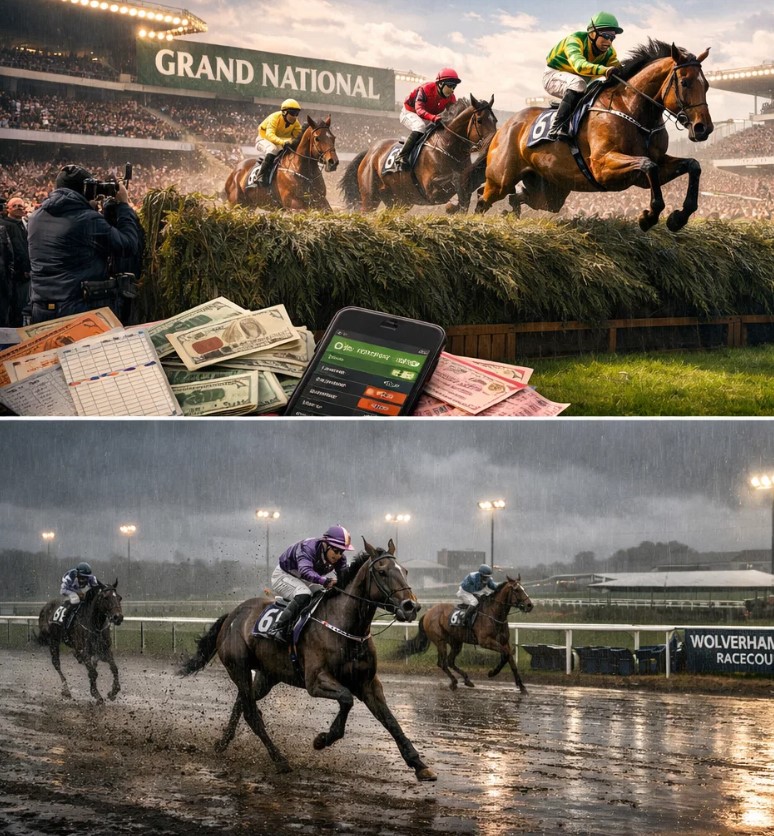
British racing treats a Tuesday afternoon seller at Southwell identically to the Derby. The BHA licenses both as if they were fundamentally the same activity requiring identical regulatory oversight. They manifestly are not. And this refusal to acknowledge reality—this polite fiction that all racing is essentially equivalent—may be killing the sport more surely than affordability checks, demographic decline, or any of the other horsemen of the apocalypse currently circling the industry. The question isn't whether Arena Racing Company is good or bad for racing, or whether the Reuben Brothers' stewardship meets some platonic ideal of racecourse ownership. The question is whether British racing can develop a coherent framework that acknowledges different types of racing serve different purposes—and governs them accordingly.
This requires two related innovations: product segregation that formally distinguishes between tiers of racing, and qualification-based licensing that requires racecourses to meet objective criteria before hosting particular grades of competition. Neither concept is revolutionary—most sports operate this way. British racing's exceptionalism in refusing to adopt such frameworks is not a virtue.
The Crisis Context
Before examining solutions, we should be clear-eyed about the problem's scale. UK racing confronts an extinction-level crisis driven by reinforcing mechanisms that would make any systems theorist weep.
Betting demand has collapsed. The Horserace Betting Levy Board's 2024/25 annual report confirms that betting turnover per race decreased by 8 percent year-on-year, by 15 percent compared to 2022/23, and by 19 percent compared to 2021/22. Q1 2025 saw total betting turnover fall a further 9 percent, with turnover per race at Core fixtures down 14.4 percent. Total betting turnover has fallen 16.5 percent compared to two years ago. This is not a gentle decline; it is a collapse. This feeds directly into the breeding economy, where only 28 percent of yearlings generate profit for breeders and the UK foal crop has contracted 7.9 percent since 2002. Field sizes are declining toward the 7-8 runner range at Core fixtures, down from the optimal 11-12 needed to maximise betting pools—and the revenue decline is exponential, not linear.
Meanwhile, successful participants face systematic exclusion. Both wealthy owners and sophisticated bettors are being driven away through affordability checks and account restrictions. The Racing Post's Big Punting Survey found that one in three punters betting £1,000 or more per transaction had used an unregulated site in the last twelve months. The industry has, with characteristic strategic brilliance, decided to eliminate its best customers.
British racing currently operates approximately 59 racecourses staging over 1,500 fixtures annually. The horse population required to sustain this level of activity simply does not exist—down 1.5 percent annually since 2022. We are running a 1990s fixture list with a 2030s horse population. Some racecourses will close. Some fixtures will disappear. The only questions are which ones, when, and whether the process is managed strategically or allowed to happen chaotically. The current governance framework ensures chaotic decline. Product segregation and qualification-based licensing offer a path to managed rationalisation.
The Case for Product Segregation
Here's a question that British racing steadfastly refuses to ask: should all racing be treated as a single, undifferentiated product? Consider the gulf between the extremes. The Grand National generates approximately £150-200 million in betting turnover on a single race. The Cheltenham Festival as a whole approaches £500 million. Royal Ascot's Group 1 races carry prize money of £650,000 to £1 million, with the Prince of Wales's Stakes worth £1 million and the King George VI and Queen Elizabeth Stakes at Ascot now offering £1.5 million. The Derby winner in 2024 collected £882,407. At the other end, a Monday evening all-weather fixture might struggle to generate meaningful betting interest on any individual race, with prize money at minimum levels. Yet the BHA licenses both as if they were fundamentally the same activity.
Consider how other industries handle product differentiation. Football doesn't pretend that the Premier League and the Isthmian League are the same product requiring identical governance. Tennis distinguishes between Grand Slams, Masters events, and Futures tournaments with different commercial models, prize money structures, and regulatory frameworks. Even cricket has learned to segment Tests, ODIs, and franchise T20 as distinct products. British racing, by contrast, maintains the polite fiction that everything from the Guineas to a Lingfield all-weather claimer exists on a single continuum requiring uniform treatment. This fiction serves nobody well. It burdens low-grade racing with regulatory overhead designed for elite competition, while simultaneously diluting the premium positioning of genuine quality racing by association with content-farming fodder.
What would formal product segregation look like? The BHA could establish explicit tiers—perhaps 'Championship' (Group and Graded races), 'Premier' (Listed and valuable handicaps), 'Standard' (typical Saturday fare), and 'Foundation' (the base-level racing that provides betting content and employment continuity). Each tier would operate under frameworks appropriate to its function.
What Might Qualify a Racecourse? Objective Criteria for Tier Allocation
If we accept that product segregation makes sense, the operational question becomes: how should the BHA determine which venues can host which tiers of racing? The current system distributes fixtures through a combination of historical entitlement, commercial negotiation, and political horse-trading. The result is a fixture list that serves nobody's strategic interests.
A qualification-based approach would require racecourses to meet specific, measurable criteria. This isn't a novel concept—it's how most sporting bodies operate. UEFA doesn't allow just anyone to host a Champions League final. The R&A maintains strict criteria for Open Championship venues. Even the Jockey Club applies informal quality thresholds to its own Pattern race allocations. The innovation would be making these criteria explicit, transparent, and universally applied. Several qualification dimensions suggest themselves, each with measurable thresholds.
Field Size Performance
Perhaps the most fundamental indicator of fixture viability is whether it attracts competitive fields. A racecourse consistently producing six-runner contests is demonstrably failing to serve the betting market that funds the sport.
Current BHA data provides benchmarks. Premier Flat meetings in 2025 averaged field sizes of 10.97 runners. Core Flat fixtures averaged 8.54. Over Jumps, Core fixtures averaged just 7.63 runners. These figures themselves reveal the scale of differentiation already embedded in the system—but without formal consequences.
Potential thresholds: Championship tier might require average field sizes of 10+ runners across qualifying races. Premier tier might require 9+ average. Standard tier might require 8+ average. Foundation tier would accommodate lower averages but with a floor below which fixtures become questionable.
Measurement could use rolling three-year averages to smooth seasonal variation, with separate calculations for Flat and Jump, turf and all-weather. Tracks consistently failing to meet tier thresholds would face relegation or, at the margin, questions about whether their fixtures should continue at all.
Prize Money Thresholds
Prize money is the primary economic signal in racing. A qualification framework should require venues to demonstrate financial commitment commensurate with their tier aspirations. Current benchmarks provide guidance. At the apex, Royal Ascot's Group 1 races carry minimum prize money of £650,000, with the Prince of Wales's Stakes at £1 million. The Cheltenham Gold Cup offers £625,000. The Derby paid £882,407 to the winner in 2024. The Grand National offers £1 million total, with £561,000 to the winner. At the other end, minimum prize funds at Core fixtures can be as low as £4,000-5,000 for Class 6 and 7 races.
Potential thresholds: Championship fixtures might require minimum race values of £250,000+ (Group 1) scaling down through the Pattern. Premier fixtures might require minimum values of £35,000-80,000 depending on race type. Standard fixtures might operate in the £10,000-30,000 range. Foundation fixtures would operate below these levels but with transparency about what participants can expect. Crucially, these thresholds should reflect racecourse contribution, not just total prize money including owner contributions and Levy Board support. A venue that relies entirely on external funding to meet thresholds isn't demonstrating the financial commitment appropriate to higher tiers. Ascot's executive contribution to prize money—budgeted at £10.1 million in 2025—demonstrates what genuine racecourse investment looks like. York is similar.
Facility Standards
Different tiers of racing should require different levels of infrastructure. This encompasses track surface quality, safety facilities, participant amenities, and spectator capacity, data and going reporting.
Track and safety standards: Championship venues might require independent track inspection certification, specific drainage standards, and comprehensive veterinary facilities. Lower tiers would have proportionally reduced requirements—but all would need to meet baseline safety thresholds.
Participant amenities: Higher tiers might require specific standards for weighing rooms, jockey facilities, owner and trainer areas, and stable yard quality. The experience of participating at a Championship venue should be demonstrably superior to Foundation level.
Spectator infrastructure: Championship venues might require minimum grandstand capacity, hospitality facilities, and accessibility compliance. Foundation venues, where on-course attendance is secondary to betting content provision, could operate with reduced spectator requirements—but this should be explicit rather than a shameful secret.
Betting Market Depth
Racing exists in symbiosis with betting. Fixtures that fail to generate meaningful betting interest are, by definition, failing at a core function. Market depth provides an objective measure of whether the product being offered has commercial value.
The data exists but remains largely confidential. We know that the Grand National generates £150-200 million in betting turnover on a single race. The Aintree Festival as a whole approaches £250 million. Major festivals collectively represent a disproportionate share of total betting activity—yet average turnover at these festivals fell 12.4 percent in 2024, while Premier race days showed turnover per race up 2.7 percent in Q3 2025 against an 8.6 percent decline at Core fixtures.
Potential metrics: Average betting turnover per race, exchange liquidity levels, bookmaker margin as a proxy for market competitiveness, and the spread of betting interest across the card rather than concentration on one or two races.
The HBLB already collects confidential race-by-race betting data from major bookmakers, publishing only the top ten races by turnover annually, this is another sign of a dysfunctional system, where bookmakers have too much influence on both culture and finances of the sport. A qualification framework would require this data to inform fixture allocation—bringing transparency to what currently remains opaque. Fixtures attracting minimal betting interest might be relegated to lower tiers—or questioned whether they should exist at all.
Historical and Heritage Factors
Not everything that matters can be reduced to metrics. Some venues possess historical significance, architectural heritage, or cultural importance that transcends their current commercial performance.
A qualification framework should include provision for heritage considerations—but with discipline. A venue might receive tier protection based on historical significance, but this should be explicit, time-limited, and subject to review. Heritage status shouldn't become a permanent exemption from performance standards; it should provide breathing room for venues to develop sustainable models.
The alternative—current practice—allows heritage claims to be deployed selectively as political shields while providing no framework for distinguishing genuine heritage assets from mere nostalgia. Explicit criteria would force honest conversations about which venues genuinely merit protection and which are trading on sentiment that the market no longer supports.
How Would This Affect Arena Racing Company?
A qualification framework would force an honest conversation about what ARC's venues are actually suited for. The likely outcome: stratification. Some ARC tracks—Newcastle and Doncaster prominent among them—could compete for higher-tier fixtures if appropriately invested. Newcastle's combination of turf and all-weather surfaces, decent facilities, and metropolitan location gives it genuine Championship potential. Doncaster's St Leger heritage and Town Moor setting provide foundations for Premier status across its calendar.
Others—the all-weather content factories at Southwell, Wolverhampton, and Lingfield—would be explicitly positioned as Foundation tier venues. This isn't denigration; it's accuracy. These tracks exist primarily to provide betting content and employment continuity. A formal framework would allow them to operate under regulatory structures appropriate to that function, rather than pretending they're failed versions of Ascot. Martin Cruddace might actually welcome such clarity. Currently, ARC is criticised both for producing too much low-grade racing and for not investing enough in quality venues. A formal tiering system would resolve this contradiction. ARC could focus resources on venues with genuine tier-elevation potential while accepting that Foundation-tier tracks require efficient operation rather than aspirational investment. The industry would gain clarity; ARC would gain legitimacy; everyone would stop pretending that Southwell sellers are failed Derby trials.
The Pyramid Structure: What Is Foundation-Level Racing Actually For?
Every sport requires a base. Professional football has the National League and below. Tennis has Futures and Challengers. Horse racing, theoretically, should have a structured hierarchy where horses progress upward based on ability, and where moderate horses can compete at appropriate levels while generating economic activity for trainers, stable staff, and owners.
The problem isn't that low-grade racing exists; it's that British racing has never coherently articulated its pyramid structure. We have drifted into a situation where the bottom of the pyramid has expanded to fill available fixture slots rather than being sized appropriately for the horse population and betting demand that actually exist. Product segregation and qualification-based licensing would impose structure on this chaos. The Foundation tier would be explicitly defined: these fixtures exist to provide betting content, employment continuity, and competitive opportunities for moderate horses. They would operate under regulatory frameworks appropriate to that function—lighter oversight, streamlined administration, perhaps even different integrity thresholds calibrated to the stakes involved.
ARC's all-weather fixtures serve multiple functions: they provide winter content for betting operators, employment for training yards, competitive opportunities for moderate horses, and media rights revenue that cross-subsidises the entire ecosystem. Eliminating this base wouldn't elevate overall quality; it would simply collapse the pyramid, leaving mid-tier trainers without economically viable options for their strings. But the current system, which treats Foundation-level racing as if it were merely inferior versions of elite racing, serves nobody. A formal tiering system would allow the industry to govern different products appropriately. Championship racing would receive the full weight of Pattern race administration. Foundation racing would receive streamlined oversight proportionate to its function and economic significance.
The Oversupply Reality and Natural Rationalisation
A qualification framework would address the oversupply problem organically. Venues unable to meet tier-appropriate standards would face clear choices: invest to qualify, accept relegation to lower tiers, or exit the industry entirely. The mathematics are unforgiving. If optimal field sizes require 11-12 runners, and Core fixtures are averaging 7.6-8.5 runners, the industry is operating at roughly 65-75 percent of productive capacity. This structural mismatch between supply infrastructure and underlying demand cannot persist indefinitely. The horse population has contracted by approximately 1.5 percent annually since 2022. Some racecourses will close.
The question is whether closures happen strategically—with value captured for reinvestment in retained venues—or chaotically, with distressed sales to opportunistic buyers and no benefit to the sport. A qualification framework creates the former pathway. Venues that cannot meet any tier's standards have a legitimate, dignified exit route. Their land value—often substantial, particularly for sites within commutable distance of major cities—can be realised and, ideally, partially captured for industry reinvestment.
The BHA wouldn't need to 'pick winners'—the framework itself would identify which venues the market can sustain. Green belt pressures make this increasingly urgent. The Labour government's housing targets require land. Racecourses represent precisely the kind of sites that planners increasingly view as acceptable for development. A 100-acre racecourse with existing infrastructure and transport links is infinitely more attractive to developers than genuinely greenfield agricultural land. The question isn't whether racecourse land will be developed, but whether racing extracts value from that process or simply becomes collateral damage.
Governance Implications: Can the BHA Actually Do This?
The BHA theoretically possesses the authority to implement qualification-based licensing. It licenses fixtures and could attach conditions. The obstacle isn't legal power; it's political will and governance structure. British racing suffers from what might charitably be termed 'alphabet soup gridlock': twelve competing governance bodies operating through consensus-based decision-making. The BHA, RCA, Thoroughbred Group, Great British Racing, Commercial Committee, and various other entities all have their fingers in the pie. One struggles to identify whose finger is attached to a functioning brain. Implementing qualification frameworks would require this structure to actually make decisions—a prospect that induces hollow laughter. Who would set the criteria? Who would enforce them? Who would handle appeals from courses failing to qualify? The current governance architecture is optimised for avoiding decisions, not making them.
Yet the alternative—continued drift toward chaotic decline—is worse. At some point, crisis forces action. The question is whether British racing develops coherent frameworks before that crisis becomes terminal, or whether it continues committee-ing sensible proposals into oblivion until external forces impose solutions far less palatable than anything the industry might design for itself. Consolidated operators like ARC actually make qualification frameworks easier to implement. Negotiating tier allocations with one entity controlling 16 venues is more tractable than negotiating with 16 independent operators, each with its own commercial pressures and political connections. The irony is that the industry structure it often criticises—portfolio consolidation—is better suited to strategic reform than the fragmented alternative.
Implementation: A Realistic Pathway
Assuming political will could be mustered, how might qualification-based licensing be implemented? Several principles should guide the process.
Transparency first. Before imposing qualification requirements, publish the data. Release field size averages, betting turnover figures, prize money contributions, and facility assessments for every venue. Let the industry see where it actually stands. Much of the resistance to reform stems from opacity that allows everyone to believe they're above average. Dont just drip feed via a Wayman report the bits of data the BHA think the public can handle.
Graduated implementation. Don't impose hard thresholds overnight. Announce the framework with a three-year transition period. Year one: data publication and tier assignment based on current performance. Year two: venues falling below thresholds receive warnings and support for improvement. Year three: full implementation with tier relegation or exit for venues failing to qualify.
Appeals and exceptions. Create a clear process for venues to appeal tier assignments, with objective criteria for heritage exemptions and investment plans. The framework should be firm but not rigid—circumstances differ, and one-size-fits-all approaches inevitably produce injustices.
Value capture mechanisms. Establish industry-wide agreements for capturing a portion of development value when racecourses exit and land is sold. This might involve planning gain contributions, Levy Board involvement, or more creative structures. The goal: ensure that rationalisation benefits the sport, not just departing shareholders.
Regular review. Tier assignments shouldn't be permanent. Annual or biennial reviews would allow venues to earn promotion through improved performance and investment, or face relegation if standards slip. This creates ongoing incentives for quality rather than one-off qualification hurdles.
The Bottom Line
British racing's refusal to acknowledge that different types of racing serve different purposes has become an obstacle to survival. Product segregation and qualification-based licensing offer a path to managed rationalisation—a way to right-size the industry while preserving what's worth preserving and creating legitimate exit pathways for what isn't. The criteria exist. Field size data, betting turnover, prize money levels, facility standards—all of this is measurable. The HBLB already collects race-by-race betting data. The BHA publishes quarterly performance reports. The obstacle isn't technical; it's political. British racing's governance structure is optimised for avoiding difficult decisions, and qualification frameworks would force many difficult decisions indeed.
Martin Cruddace and ARC would likely adapt. A formal tiering system would clarify their role: efficient operators of the pyramid's base, with selective investment in venues capable of tier elevation. The current ambiguity—criticised for volume, criticised for quality, criticised for existing—would resolve into something more honest and more governable. The question isn't whether rationalisation will happen. It's whether racing controls the process or simply suffers it.
Betting turnover per race has fallen 19 percent in three years. The horse population contracts by 1.5 percent annually. Field sizes at Core fixtures have dropped below eight runners. And the governance bodies hold another meeting to discuss whether perhaps a working group might examine the possibility of considering potential frameworks for future evaluation.
Meanwhile, the market is making its own decisions. Owners are leaving. Bettors are being driven to unlicensed operators—one in three high-staking punters now admit to using the black market. Breeding economics guarantee losses for 72 percent of yearling producers. The industry that cannot bring itself to acknowledge that a Southwell seller differs from the Derby will eventually discover that the market has rationalised the fixture list on its own terms—and those terms will be considerably less favourable than anything a sensible framework might have delivered.
The tools exist. The data exists bur not consolidated. The question is whether the will exists. On current evidence, one wouldn't bet on it—but then, the industry has made betting on British racing an increasingly irrational proposition anyway.
Cutting Comment Ed Grimshaw 20th December 2025